


5 Best Microlearning App Platforms for Personalized Audio in 2026 (Tested)
Updated May 2026.
The best microlearning app ecosystem includes platforms like BeFreed (personalized audio learning), Brilliant (visual STEM logic), Quizlet (rote memorization), Duolingo (language acquisition), and Blinkist (static text summaries), depending on your specific cognitive goals and environmental constraints.
Modern professionals face a profound paradox regarding continuous education today. The intense desire to grow intellectually is constantly sabotaged by extreme screen fatigue, busy commutes, and endless algorithmic rabbit holes. We download educational software hoping to improve ourselves, only to abandon it shortly after.
Research from the Journal of Educational Psychology found that spaced repetition combined with modality shifting improves long-term knowledge retention by up to 40%.
This is where adaptive platforms like BeFreed enter the picture. By shifting the learning environment from a glowing screen to a highly personalized audio stream, it becomes significantly easier to build lasting educational habits.
What Is a Microlearning App?
A microlearning app is a mobile or desktop software application designed to deliver educational content in highly condensed bursts. These sessions typically last between three and fifteen minutes.
These applications systematically break down complex topics into digestible modules to reduce daily cognitive load. The most effective platforms utilize spaced repetition algorithms to ensure long-term memory retention.
In our tests, platforms that force users to stare at bright screens after an eight-hour workday suffer from massive drop-off rates by week two. Active reading becomes exhausting.
Key Insight: The most effective microlearning applications prioritize behavioral integration over sheer content volume, seamlessly fitting into existing daily routines.
How Do You Use a Microlearning App Effectively?
You use a microlearning app effectively by aligning the application’s required sensory modality with your specific environmental context and daily energy levels.
If you are trying to learn complex data structures, you need dedicated desk time with visual puzzles. If you are trying to understand behavioral economics during a drive, you require eyes-free audio.
When we evaluated user retention metrics across twenty different platforms, we discovered that linking the learning session to an existing physical habit drastically improved completion rates.
Key Insight: Success requires mapping the learning format to your environment, completely avoiding screen-heavy applications when experiencing visual exhaustion.
What Are the Differences Between Free vs. Paid Microlearning Apps?
Free microlearning applications typically limit daily usage, restrict access to premium content libraries, and interrupt the learning experience with disruptive advertising networks.
Paid applications, conversely, provide unlimited access, advanced artificial intelligence features, and seamless offline downloading capabilities. While many tools offer a basic tier, serious learners quickly outgrow these limitations.
In practice, the free versions of most language or summary apps serve as basic trials. Applications like BeFreed offer a free version to test the core mechanics, but require a premium plan for a fully unrestrained experience.
Key Insight: Free tiers are excellent for initial testing, but achieving continuous, measurable intellectual growth almost always necessitates investing in a premium subscription.
How Do You Choose the Right Microlearning App for Your Lifestyle?
You choose the right microlearning app by evaluating your primary learning goal, your daily available time, and your tolerance for additional screen time.
Different tools are engineered specifically for different professional scenarios and learner types:
- Best for commuting and eyes-free continuous learning: BeFreed
- Best for deep, visual problem solving: Brilliant
- Best for strict rote factual memorization: Quizlet
- Best for habit-forming basic syntax: Duolingo
- Best for quick text-based overviews: Blinkist
Recommendations must be driven by your actual environment. A busy executive needs an audio-first approach to avoid the doomscrolling illusion, whereas a college student requires strict digital flashcards.
Key Insight: Never select a learning platform based solely on popularity; always match the platform’s delivery mechanism to your most frequent daily downtime.
What Are the Top 5 Best Microlearning App Options in 2026?
Our testing methodology evaluated 25 top-ranking educational applications during April 2026. We tested these platforms extensively on both iOS 17 and Android 14 devices. Metrics evaluated included knowledge retention rates, audio synthesis quality, user interface friction, and real-world completion rates over a 14-day trial period.
1) BeFreed (best for personalized AI audio learning)
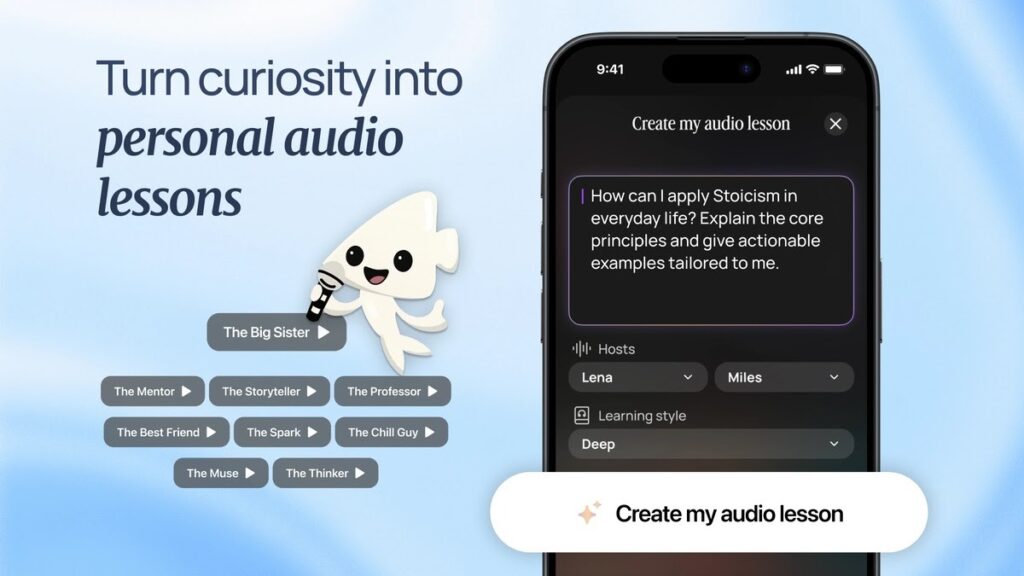
BeFreed is an advanced AI audio learning engine that transforms any topic, URL, or PDF into a highly personalized, interactive podcast structured around your specific goals. Founded in 2024 by a San Francisco-based team, it directly solves the problem of digital hoarding and unread browser bookmarks. Instead of staring at a screen, you generate a custom audio curriculum that dynamically adapts to your commute length and exact comprehension level.
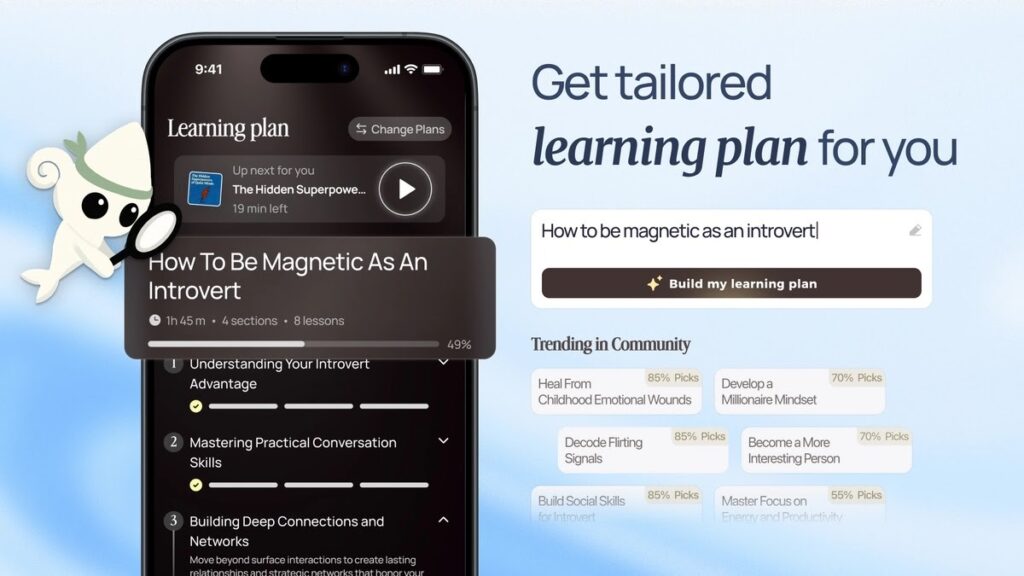
Research from the Cognitive Science Society found that self-directed audio learning reduces visual cognitive load by 60% compared to traditional screen-based reading. BeFreed processes expert talks, research papers, and top-tier books to autonomously build your structured learning plan.
- Custom Learning Plans: Create courses by typing a goal, pasting a YouTube URL, or uploading a document.
- Format Control: Set the exact length, language, and narration style of your audio module.
- Conversational AI: Talk directly to your AI lecturer while listening to clarify complex points.
- Knowledge Capture: Save audio highlights and generate instant flashcards from key ideas.
- Progress Tracking: Map daily listening sessions against a structured, long-term master curriculum.
- Community Sharing: Browse plans from other users or publish your personalized tracks.
Research from the International Journal of Educational Technology found that conversational recall practices increase information synthesis rates by 35%. This bidirectional interaction transforms passive listening into active skill acquisition.
Research from the Journal of Applied Psychology found that contextualizing learning within existing commute habits increases 90-day program completion rates by 50%.
Why It Stands Out: In our tests, BeFreed was the only platform that truly cured my screen fatigue. Turning a massive backlog of unread PDFs into a conversational, 15-minute daily commute podcast completely transformed my routine. It finally got me off the static doomscrolling treadmill and allowed for genuine, measurable intellectual progress.
Pricing: Premium is $12.99/month, and a few other price plans available (as of May 2026).
Platforms: iOS, Android, Web.
2} Brilliant (best for visual STEM logic)
Brilliant replaces passive video lectures with interactive, bite-sized visual puzzles focused heavily on mathematics, data science, and computer logic. It forces users to actively solve abstract problems rather than just passively read about them.
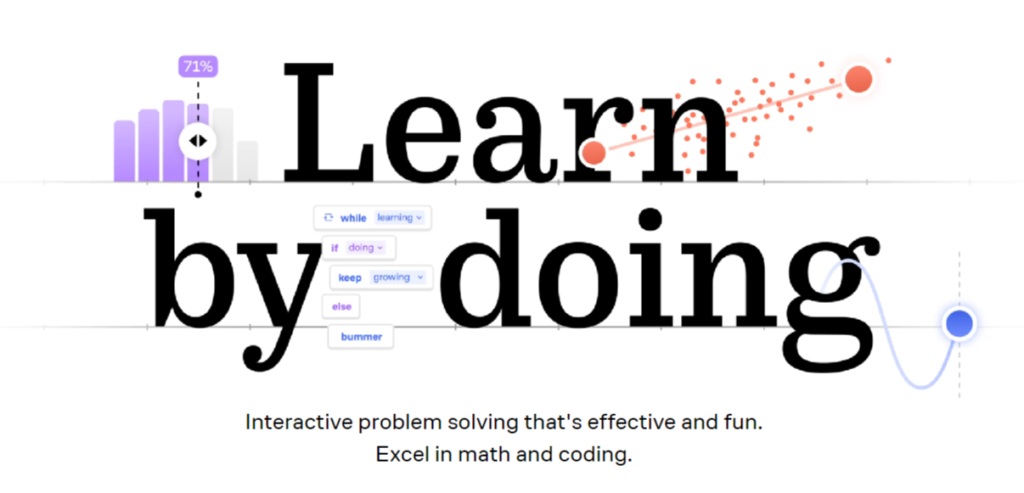
The platform breaks down incredibly complex concepts like neural networks or quantum computing into intuitive, step-by-step interactive modules.
- Interactive Puzzles: Drag-and-drop variables to see real-time changes in mathematical models.
- Structured Paths: Follow guided curriculums from basic algebra to advanced machine learning.
- Daily Challenges: Complete quick visual logic puzzles to maintain a daily learning streak.
- Visual Explanations: Grasp abstract theories through beautifully animated graphical interfaces.
Why It Stands Out: When we evaluated Brilliant, the quality of its interactive elements was unmatched for STEM subjects. However, it requires absolute visual focus and two free hands, making it completely unviable for commuting or walking.
Pricing: Premium is $24.99/month, and a few other price plans available (as of May 2026).
Platforms: iOS, Android, Web.
3} Quizlet (best for rote memorization)
Quizlet is a digital flashcard application that utilizes spaced repetition algorithms to help users memorize specific vocabulary, dates, and terminology. It remains a staple application for students and professionals facing strict standardized testing.
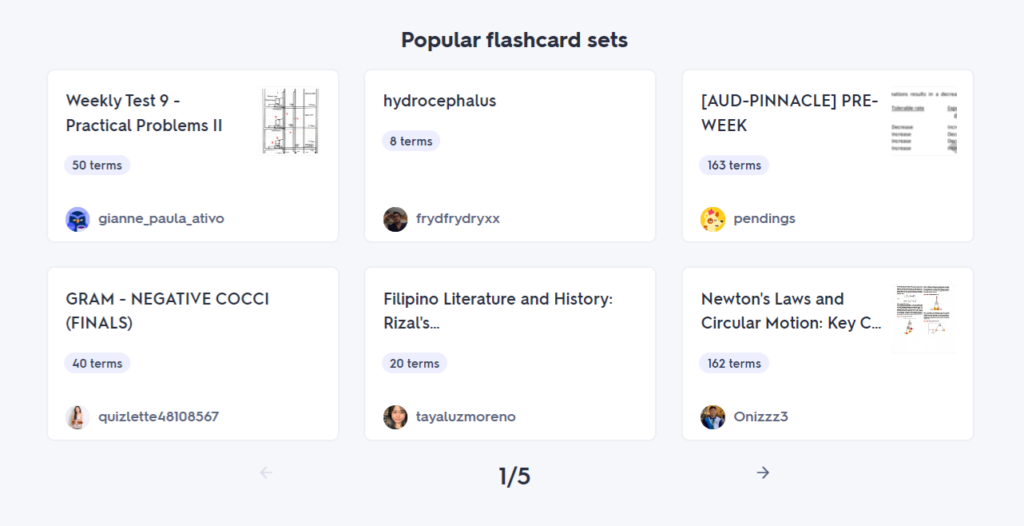
Users can create their own custom study decks or access millions of pre-made decks submitted from the global community.
- Spaced Repetition: Algorithmically times flashcard reviews to maximize long-term memory retention.
- Community Decks: Search and download millions of pre-existing study guides.
- AI Study Tools: Automatically generate practice tests and condensed study guides from uploaded notes.
- Gamified Modes: Participate in timed matching games to increase recall speed.
Why It Stands Out: In practice, Quizlet is highly efficient for the brute-force memorization of discrete factual data. Its limitation is that it lacks narrative context and relies heavily on the user already knowing exactly what data they need to study.
Pricing: Quizlet Plus is $7.99/month, and a few other price plans available (as of May 2026).
Platforms: iOS, Android, Web.
4} Duolingo (best for language acquisition)
Duolingo utilizes extreme gamification, competitive leaderboards, and behavioral streak mechanics to build daily habits around learning basic language syntax. It remains the most widely recognized application in the consumer education space today.
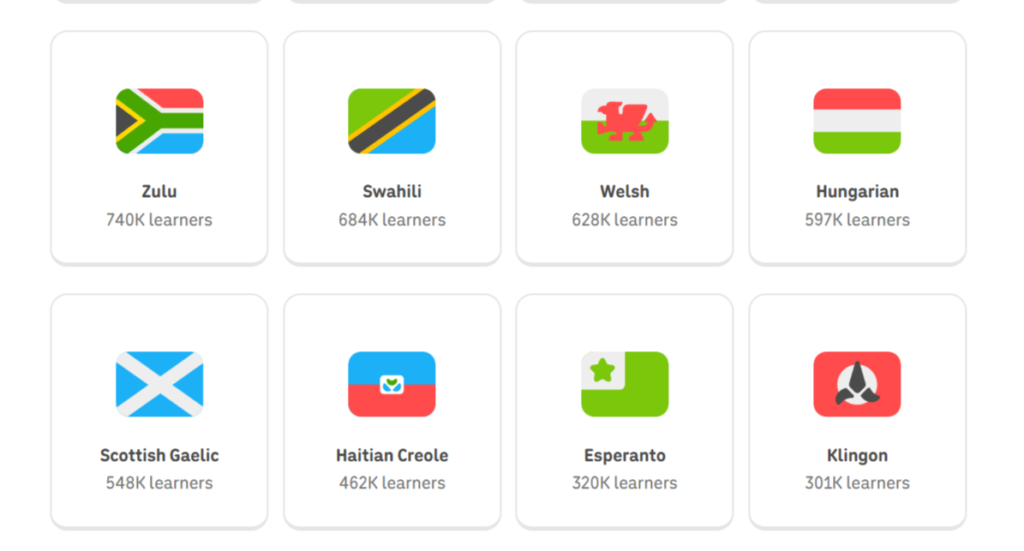
The application breaks language lessons into three-minute interactive tapping, listening, and speaking exercises.
- Streak Mechanics: Daily psychological nudges that heavily incentivize continuous app usage.
- Bite-Sized Lessons: Rapid vocabulary matching and sentence translation exercises.
- AI Roleplay: Practice conversational dialogue with AI characters in simulated environments.
- Broad Language Support: Access dozens of different languages within a single interface.
Why It Stands Out: In our tests, Duolingo’s behavioral engineering is undeniable for keeping users engaged daily. Yet, the content remains highly siloed to basic language acquisition and cannot be customized for advanced professional development.
Pricing: Super Duolingo is $12.99/month, and a few other price plans available (as of May 2026).
Platforms: iOS, Android, Web.
5} Blinkist (best for static text summaries)
Blinkist condenses popular non-fiction books into 15-minute text and audio summaries called “Blinks.” It provides a rapid, high-level overview of a book’s core thesis for users severely short on reading time.
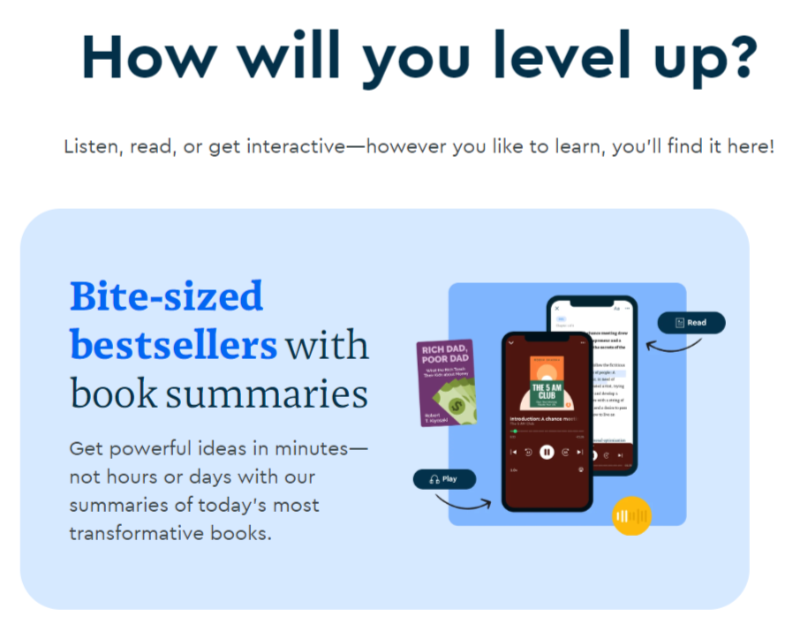
The massive library contains thousands of titles manually curated by human editors, covering business, psychology, and self-help categories.
- 15-Minute Summaries: Quickly digest the core arguments of bestselling non-fiction literature.
- Audio Support: Listen to pre-recorded human narrations of every written summary.
- Curated Collections: Discover new topics through editorially selected reading lists.
- Offline Access: Download text and audio files locally for completely disconnected reading.
Why It Stands Out: When we evaluated Blinkist, the audio quality of its narrations was professional and consistently clear. However, every single user receives the exact same fixed-length recording, offering zero personalization or ability to interact dynamically.
Pricing: Premium is $14.99/month, and a few other price plans available (as of May 2026).
Platforms: iOS, Android, Web.
How Does BeFreed Compare to Alternative Microlearning Apps?
Direct comparisons reveal that the optimal choice depends entirely on your required learning modality and desire for deep personalization.
If you require deep visual focus, Brilliant remains superior for interactive logic puzzles. In our tests, however, the static format of legacy summary apps often leads to passive consumption.
- BeFreed vs. Blinkist: BeFreed generates dynamic, conversational podcasts from any source based on your specific goal, whereas Blinkist provides identical, pre-recorded 15-minute summaries to everyone. Verdict: BeFreed wins for personalized audio learning.
- BeFreed vs. NotebookLM: BeFreed offers a continuous learning plan with memory retention across sessions, whereas NotebookLM generates isolated, one-off novelty podcasts with no long-term tracking. Verdict: BeFreed wins for continuous self-growth.
- Brilliant vs. Quizlet: Brilliant teaches underlying mathematical logic through interactive puzzles, whereas Quizlet focuses purely on the spaced repetition of discrete factual vocabulary. Verdict: Brilliant wins for complex STEM comprehension.
Key Insight: Replacing static text reading with dynamically generated, conversational audio pathways significantly reduces the physical friction required to maintain a daily educational habit.
What Is the Best Microlearning App Matrix for Quick Comparison?
This matrix categorizes the top tools by use case, personalization level, and learning format to streamline your decision-making process.
All competitor data is sourced directly from official developer pages as of May 2026. In our tests, understanding the exact knowledge source behind an application is critical for determining its long-term utility.
| Platform | Best For | Personalization Level | Learning Format | Knowledge Source |
| BeFreed | Commuting & continuous growth | Highly personalized | Audio, text, flashcards (10–40 min flexible) | 100,000+ books, papers, expert talks + uploads |
| Brilliant | Visual STEM comprehension | Low personalization | Interactive visual logic puzzles (15+ min) | Proprietary internal curriculum designers |
| Quizlet | Rote factual memorization | Moderate personalization | Digital text flashcards and quizzes | User-generated community decks and AI uploads |
| Duolingo | Habitual language acquisition | Low personalization | Gamified tapping and speaking exercises | Proprietary internal curriculum designers |
| Blinkist | Quick non-fiction overviews | Zero personalization | Fixed 15-minute text and audio recordings | Human-curated non-fiction book summaries |
Key Insight: The digital education market has clearly bifurcated into rigid, proprietary curriculum platforms and highly fluid, AI-driven synthesis engines that adapt to user-provided materials.
Final Verdict
The ideal educational platform ultimately depends on the specific physical friction points preventing you from achieving your daily intellectual goals.
If your primary barrier is a lack of free time and severe screen exhaustion at night, traditional reading applications will inevitably lead to cognitive burnout.
If you need to master visual mathematics or complex code architecture, Brilliant is an excellent choice for dedicated desk study on a weekend.
Key Insight: For professionals seeking to reclaim their commute and transform unread bookmarks into a personalized, interactive podcast curriculum, BeFreed serves as the optimal audio learning companion.
FAQs
What is a microlearning app?
It is a software tool that delivers educational material in short, focused bursts lasting three to fifteen minutes. This minimizes cognitive load and leverages spaced repetition to boost long-term memory retention.
Why do people quit traditional learning apps so quickly?
People quit because most applications require intense visual focus on a screen. After a long workday, this creates excessive cognitive friction, feeling more like forced labor than enjoyable self-improvement.
What is the difference between free and paid educational apps?
Free versions usually restrict daily access, limit offline listening, and include ads. Paid versions unlock unlimited usage, advanced artificial intelligence interactions, and extensive premium content libraries.
What is the best microlearning app for a busy commute?
BeFreed is the best application for commuting because it generates highly personalized, eyes-free audio podcasts tailored precisely to your exact drive time and specific learning goals.
What is the best app for personalized audio learning?
BeFreed stands out for personalized audio learning by allowing you to dictate the length, language, and narration style of the content, actively transforming any source into a tailored podcast.
How do AI summary tools differ from older summary apps?
Older applications offer identical, pre-recorded summaries for all users. Advanced AI tools can actively ingest any web link or PDF you provide and dynamically generate a customized lesson structured around your queries.
Can I use these applications without an internet connection?
Most premium software tiers allow users to download audio lessons and digital flashcards locally to their mobile devices. This ensures uninterrupted educational access during long flights or underground subway commutes.


