


How Your Mobile App Development Strategy Can Benefit from Content Marketing
Content marketing drives every part of digital marketing. You can’t have an email campaign, SEO campaign, or social media campaign without content.
And if you’re developing a mobile app, having great content is one of the best ways to attract leads and customers.
Let’s take a closer look at the benefits of mobile content marketing, how it helps spread the word for your app, and how to use it to market your app.
Benefits of Strategic Content Marketing
A thoughtful content marketing strategy pays off indefinitely if you stay consistent and focused on audience intent.
Some of the top benefits of strategic content marketing include:
- Centers your SEO strategy and guides every other marketing effort.
- Boosts customer engagement and interest across channels.
- Attracts more qualified leads and long-term customers.
- Earns more brand mentions and organic references.
- Increases brand awareness and visibility.
- Fosters greater trust with your audience.
- Attracts consistent, compounding traffic.
- Helps you build authority in your space.
When your app is developed enough for push notifications and content menus, you can use mobile content marketing to:
- Get real-time feedback for product improvements.
- Drive organic discovery.
- Educate users.
- Reduce churn.
Let’s dig into this further below.
How Content Marketing Helps Spread The Word For Your Mobile App
Content marketing gives your mobile app multiple ways to get discovered without relying on constant ad spend.
Each piece of content works like a distribution asset that keeps circulating long after it’s published. (We call that evergreen content in the content marketing world.)
Search optimized content brings in steady SEO traffic from people actively looking for solutions your app provides.

Screenshot of a “mobile pomodoro app for sprints” Google search.
As that content gets referenced, it also increases your chances of being pulled into AI SEO citations, where AI chat tools surface trusted sources to answer user queries.
This visibility compounds over time.
Helpful, experience-driven content is more likely to earn Reddit mentions and spark discussion in other niche communities. When users reference your app organically in threads, it builds credibility in places ads can’t reach.

Reddit discussion screenshot about the best app for the Pomodoro technique.
The same content fuels user-generated content, like social media posts and mentions. It gives your audience something useful to share. These social shares, along with forwarded emails, extend your reach through personal networks. (Often the most trusted kind of exposure.)
And as your content gets cited, linked, and discussed, it attracts quality backlinks from relevant sites. These links strengthen your SEO performance and reinforce your app’s authority.
Over time, all of this creates natural word of mouth. People discover your app, and they recommend it because your content helped them first.
How To Get The Word Out About Your Mobile App With Content
As we mentioned above, instead of relying on one channel to do all the work, content marketing creates a whole web of visibility around your mobile app.
Each piece of content creates another way for users to find your app.
Here’s how to create this multi-channel content marketing engine for your app:
Use search engine optimization to boost your search rankings and attract more traffic to your app and website
Start by building a content marketing strategy.
You need to:
- Identify your target audience.
- Outline your buyer personas, their pain points, and how your solution solves them.
- Find their top questions and related questions/searches. (Highlight the keywords with low competition.)
Use this data to map out a blog posting strategy.
Target the low competition SEO keywords you found above to get faster traction with SEO.

Low Competition Keywords
You’ll need to publish authoritative blog posts that cover these main topics and their related subtopics. Interlink these strategically to create topic clusters.
This is how you write content for both search engines and people. Search engines can better recognize which topics your site specializes in to better rank your articles. And users can find the answers they need on your app or site — which nudges them closer to conversion. ☑️
To encourage AI SEO citations, use structured data and clean content formatting.
(Include FAQs, author schema, blog post schema, product schema, etc. Meet with an SEO strategist for help if you don’t know how to do this.)
Make sure to have mobile-optimized blogs so your articles look clear and are easy to read on mobile devices, too.
Here are some more mobile content marketing best practices:
- Implement location-based marketing: If you have or want a solid local presence, use
local SEO keywords in your content. These are location-based keywords, like “top mobile groomer in Albuquerque, New Mexico.”
- Implement mobile SEO marketing: See what keywords users are searching for (related to the problems you solve) via mobile search and voice search. Target these in your mobile-optimized blog posts, too. Target these in your mobile-optimized blog posts to improve mobile search visibility effectively.
- Use SMS marketing and push notifications: After your app’s live, speak to customers in-app and send them text messages. Offer promos, discounts, gamified experiences, and helpful guides.
- Implement good technical SEO: Use responsive design, improve app and site speed, and create a seamless user experience.
You can also repurpose some of your blog snippets in the content campaigns below. For example, turn a blog post into an educational carousel on Instagram. Or pull an infographic out of an article and share it on LinkedIn.
For even more blog traction, offer to guest post on authoritative sites that target your audience, but aren’t competitors. This can help you build quality backlinks, authority, and more organic traffic.
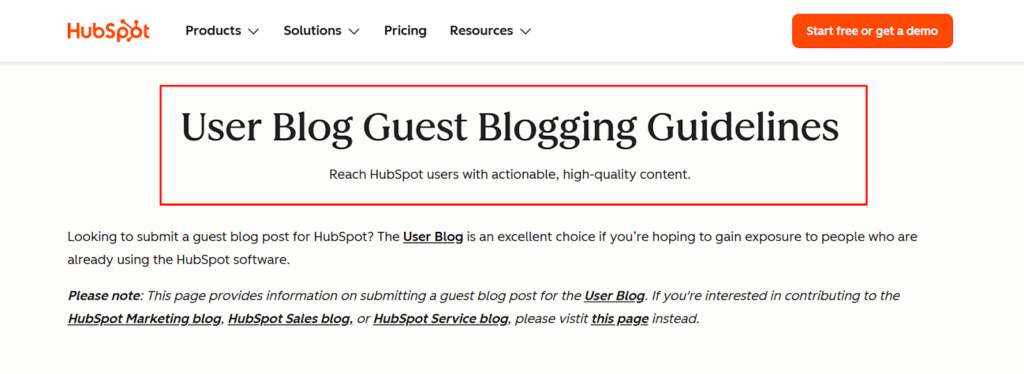
Guest Posting
Below you’ll find some more content marketing channels to focus on and how to target them.
But before targeting any other channel, map out potential customer journeys and interaction points. (For example, if you have a B2B app, many of your users will likely be on LinkedIn versus Instagram. In this case, it may not be worth your time to spend too much time on Instagram content.)
You also need to devote some time to batch create quality visual content. You’ll need this for all of your marketing channels.
For example, consider stocking up on:
- Short-form videos showing real use cases or before/after scenarios.
- Testimonials, reviews, or user quotes designed for social sharing.
- Educational carousels breaking down tips or workflows.
- App UI walkthrough screenshots and short demo clips.
- Infographics that visualize data, processes, or results.
- Feature highlight graphics with clear benefit callouts.
Here are some more content marketing ideas you can test.
Use social media marketing to attract users to your app from social media platforms
Show up on social media apps your target users are on.
If your app is already getting some traction, use a social listening tool to pull and re-share natural mentions in your social media posts. This is a great way to earn trust with cold leads and start building a user-generated content (UGC content) repository.
Speaking of UGC, you can also partner with micro-influencers in your niche to spread the word about your app. They’ll give you automatic exposure to their audiences, and if they do a good job, your app will instantly get more traction.
If you’re still developing your app, start a behind the scenes series. Show users how you’re building it, why you’re building it, its features, and who it’s meant to help. For teams focused on software development for startups, this kind of transparent storytelling also signals how you think, work, and make decisions, which helps attract the right early users and partners. This is a great opportunity to lay some brand storytelling and build emotional connections with your audience.

Bonus Tip: When relevant, offer potential users early access bonuses, free trials, or discounts. Collect their email addresses when they claim these so you continue communicating with them via newsletters.
Speaking of which …
Post regular product updates via your email newsletter and LinkedIn
Share ongoing product updates and new features via email campaigns and LinkedIn posts. This creates a natural buzz about what you’re building if you use the right copywriting.
Make sure to write copy that’s clear and hyper-personalized to your ideal customer. And when possible, offer value.
For example, if you’re building a productivity app for college students, you can use your greeting to explicitly say you’re speaking to them.
For instance, via email, you might start out with:
“Dear college students, …” Or, “Fellow students, …”
On LinkedIn, you might start your posts like this:
“College students: …” Or, “Hey college students, …”
For value, you might offer:
- A short study hack tied to a real college workload (midterms, finals, group projects).
- A behind-the-scenes look at a feature you’re building and the problem it solves.
- A question or poll asking students what they struggle with most right now.
- Early access or sneak peeks for students who want to test new features.
- A simple checklist for staying focused during classes or study sessions.
- A time-blocking or planning template designed for a student schedule.
- Quick productivity tips students can use this week.
This continues to reinforce who you’ve built the app for and encourages others in your target audience to give it a try.
Wrap up
Content marketing supports your mobile app long before launch and continues driving growth after. When you focus on helpful, mobile-first content, you attract the right users, build trust, and reduce churn over time.
PS: Want to elevate your app’s website experience? Try our SaaS theme or dark mode plugin.
FAQs About Mobile Content Marketing
It means creating and distributing content that’s optimized specifically for mobile users. It’s meant to engage them across apps, social media, and mobile web.
Mobile users have unique behaviors and contexts, so tailored content improves engagement, retention, and conversion on mobile devices.
Keep it concise, visually rich, fast-loading, and designed for small screens and touch interaction.
Short videos, infographics, microblogs, interactive tutorials, and swipeable stories are most effective.
It educates users, reduces churn, drives organic discovery, and provides real-time feedback for product improvements.
Social media, in-app messaging, push notifications, mobile-optimized blogs, and video platforms.
Track engagement metrics like time spent, shares, and click-through rates. Correlate them with app installs, retention, and usage.
Yes. Quality content boosts user reviews, ratings, and backlinks. All of which influence app store optimization (ASO).
Regularly. For example, weekly or biweekly, to stay relevant and aligned with user needs and app updates.
Absolutely. Personalized content increases relevance, engagement, and user satisfaction on mobile platforms.


